


Table of content
Knowing how to care for dementia patients in care homes means understanding that quality of life in residential settings depends on how staff interact, not just what tasks they complete. The CDC reports that 41.1% of nursing home residents had Alzheimer’s or another dementia in 2022.
Dementia is a syndrome of disorders affecting memory, cognition, behavior, and communication. With U.S. people living with dementia facing $384 billion in projected 2025 care costs, skilled caregivers are a direct quality and risk investment.
This article from Defuse De-escalation Training is for care home administrators, memory care directors, nursing leadership, and training and risk managers. Quality dementia care depends as much on staff behaviour as on what professional care is delivered.
Key Elements of Dementia Care in Care Homes
Person-centered care, the first of the key elements, means knowing the person: their routines, triggers, calming cues, and communication style. It involves putting the person before the task.
Staff training in person-centered care reduces agitation, improves quality of life, and, in some trials, reduces falls. Safety and dignity are equal priorities, where every interaction is an opportunity for engagement.
Behavioral goals, like being calmer, having fewer escalations, more successful redirection, and more meaningful activities, are key elements staff can practice and improve.
The 7 Essential Skills
Skill 1: Emotional Validation and Reassurance
Acknowledging a resident’s emotion before redirecting is the foundation of dementia care interaction. Provide reassurance, avoid arguing, and recognize that behaviour is driven by the disease, not intent. Emotional support before redirection reduces the risk of resistance to personal care, shouting, or physical escalation.
Skill 2: Calm, Regulated Communication Under Stress
NIA recommends yes/no questions, simple choices, rephrasing instead of repeating, and more response time. Tone matters as much as words because hurried speech intensifies resistance.
Caregivers under stress speak faster and wait less, which is exactly when communication breaks down. De-escalation training for healthcare staff working with vulnerable populations addresses this directly: Regulated communication under pressure is where escalation is prevented.
Skill 3: Reading Nonverbal Cues and Unmet Needs
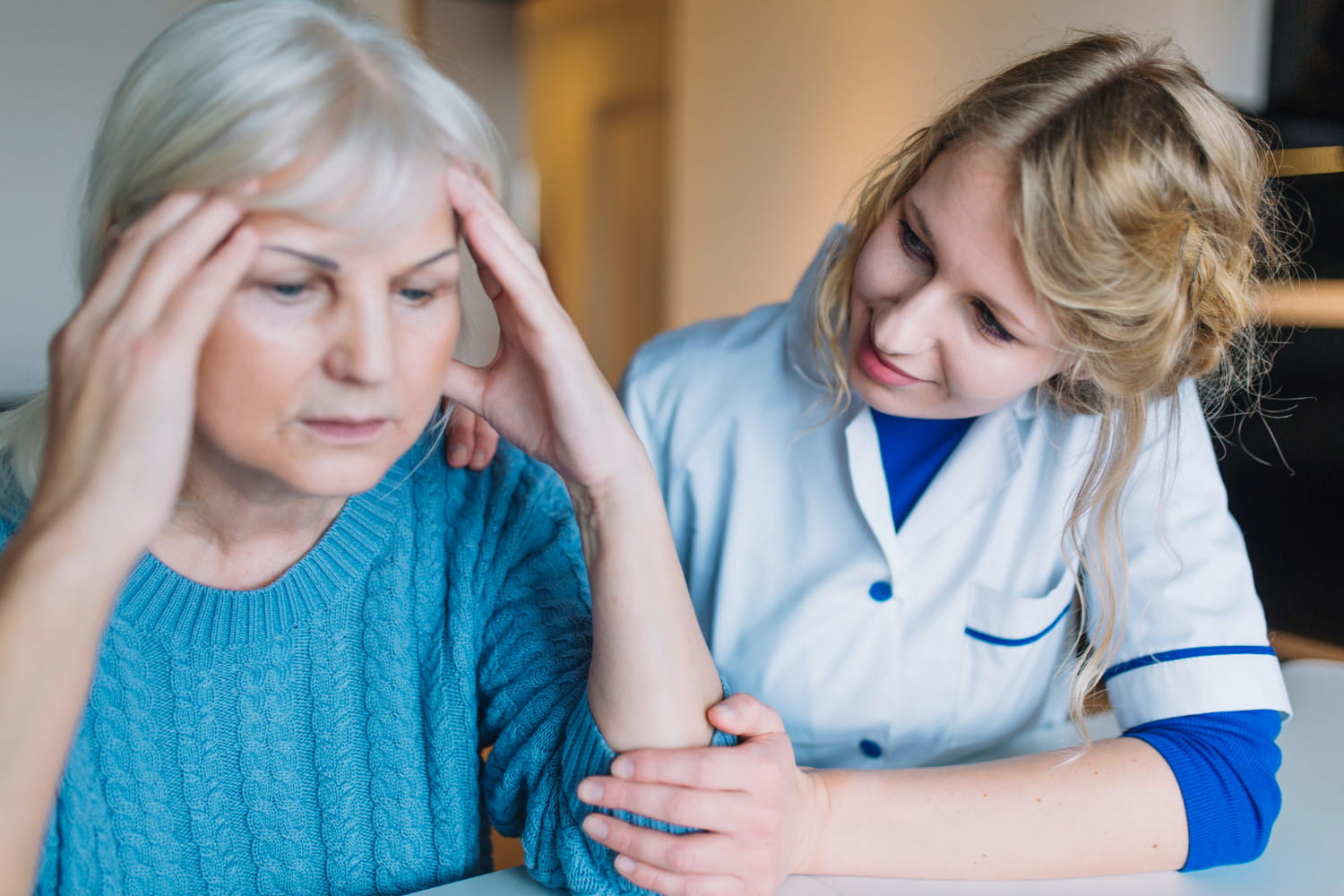
As verbal ability declines, people with dementia rely more on facial expressions and body language. Behaviour is non-verbal communication of a feeling, unmet need, or intention. Skilled caregivers maintain eye contact, read body tension, and ask internally: Is this person communicating pain, fear, fatigue, or a need for reassurance?
Skill 4: Redirection and Distraction
Attention should be redirected to a new activity. Distraction is a core distress response. Meaningful activities like a walk, familiar music, or photographs shift people living with dementia away from distress without confrontation. Redirection is one of the most effective coping strategies for everyday tasks that might otherwise trigger refusal of care.
Skill 5: Responding to Repetitive Questions Without Frustration
Repetitive questions reflect anxiety or memory loss, not defiance. When a person senses staff frustration, anxiety escalates. The skill is answering the fifteenth repetition as calmly as the first. Visual cues, like a whiteboard or printed schedule, can reduce frequency and provide reassurance between interactions.
Skill 6: Environmental Awareness and Sensory Regulation
Noisy environments are common behavioral triggers. Safety features should include high-contrast signage at eye contact level, well-lit corridors, and low clutter. A comforting environment with a predictable layout reduces safety measures failures before they occur. Environmental awareness is a dementia care skill and a de-escalation one.
Skill 7: Staff Self-Regulation and Emotional Control
Caregivers should step back and calm themselves when frustrated because dysregulated staff escalate fragile situations. A 2020 review found that staff confidence in caring for people living with dementia increased significantly after structured programs. Caregiver support and trained self-regulation reduce safety concerns and burnout.
Communication Strategies and Emotional Support
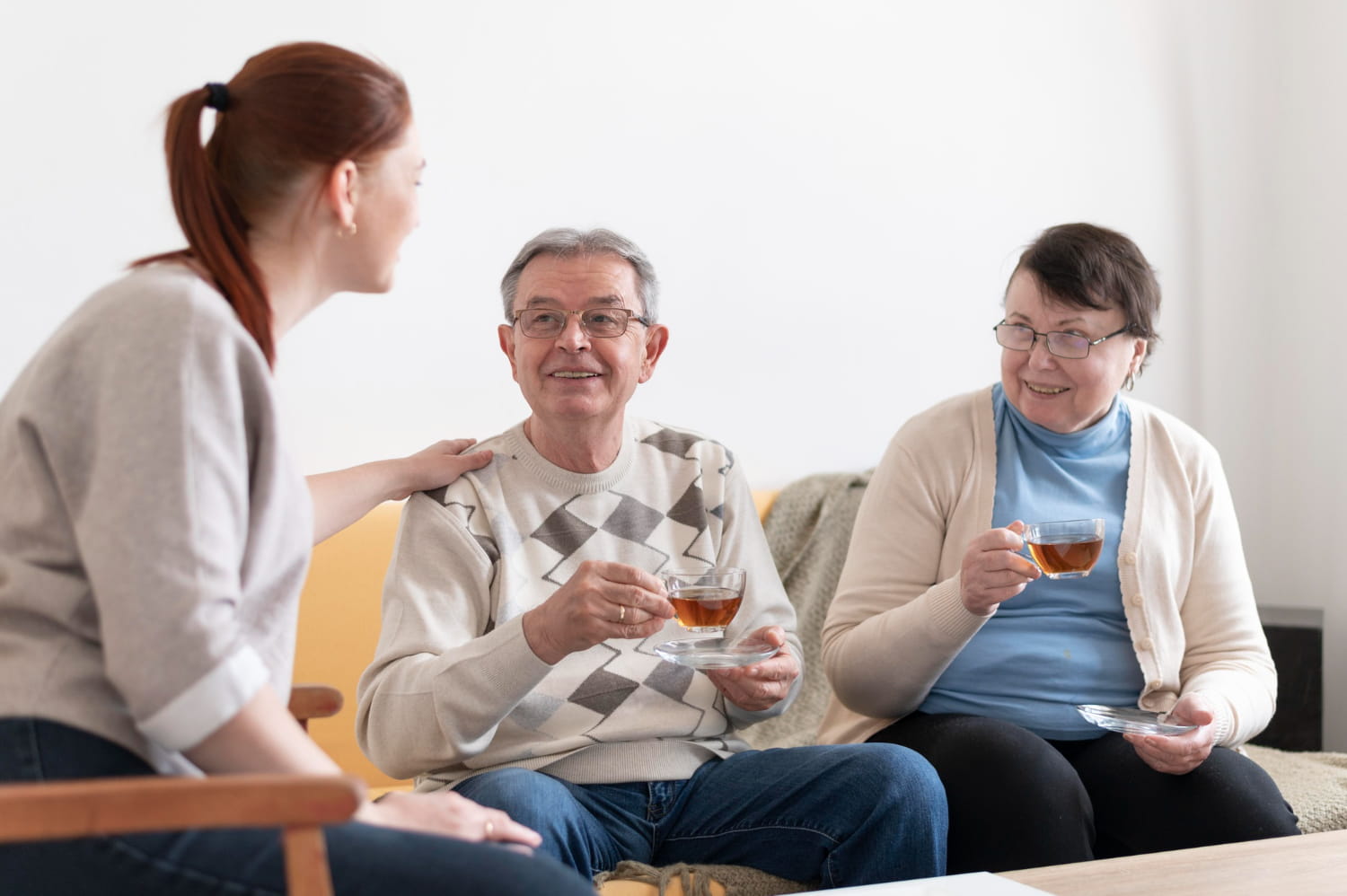
Communication is a primary safety tool in dementia care. Simple language, one idea at a time, and rephrasing rather than repeating are highly recommended. Validation before correction is the standard.
Research shows patronizing “elderspeak” increases resistance to care in nursing home residents. Maintain eye contact, keep sentences short, and provide reassurance before redirecting. Communication builds relationships and peace, not just task completion.
Manage Behavioral Changes Safely
Behavioral changes in people with dementia are a form of communication; they express a feeling, unmet need, or intention. Common non-medical triggers include fear, pain, hunger, sleep disruption, and sensory overload. As dementia progresses, these become harder to articulate.
Avoid confrontation by redirecting. Documenting patterns helps caregivers identify causes, manage safety concerns, and protect the person’s ability to feel safe over time.
Environment, Routine, and Safety
People living with dementia do better when changes in routine and environment are minimized. A secure environment reduces cognitive load. Environmental choices, such as reduced noise, calmer lighting, clear wayfinding, and familiar objects, function as de-escalation tools.
Safe and secure environment design is a proactive safety measure strategy. Wandering risk rises when residents become upset. Balancing safety with dignity means supporting movement rather than defaulting to restriction.
Training, Staffing, and Accountability
Dementia care capability should be built and refreshed, not assumed. HRSA provides training resources for nursing home staff and direct service workers. Evidence review links staff education in person-centred care and communication with measurable quality gains: less agitation, better quality of life, fewer falls.
Policy awareness is not enough, as skills require caregiver support, coaching, and practice under stress. Staff who have practiced regulated responses maintain them under pressure. Those who have only read a policy do not.
Support Families Without Escalation
Many families arrive at residential dementia care having managed care in their own homes or through in-home care arrangements. Family members may interpret distress or behaviour changes differently from staff. That gap is where tension grows.
Structured communication with family caregivers is a safety issue during care transitions. Frame every conversation around the person’s best interests and well-being. Families who understand what the staff is doing become loved ones’ strongest allies.
Measuring Quality and Continuous Improvement
Improving quality in dementia care means tracking the right signals:
- Fewer behavioral incidents and escalation events
- Reduced refusals of care or resistive episodes
- Fewer falls linked to agitation or unsafe wandering
- Improved staff confidence after training programs
- Better family members’ satisfaction and fewer communication-related complaints
- Improved emotional safety for both residents and staff
Structured education is linked to good quality outcomes and stronger professional care confidence. Frame quality data not as compliance, but as education feedback: It shows where focus is still needed.
Conclusion
Dementia care is relational. Validation, regulated communication, redirection, environmental sense, and self-regulation are not supplements to care. They are care.
Caregivers who have trained these skills create calmer community environments, stronger relationships with families and loved ones, and quality of life outcomes that reflect genuine professional care. Training is not a soft investment. It is the work.
