













Table of Contents
- Introduction: Why De-Escalation Training Matters Now
- Why Police Officers Need De-Escalation Training
- Common Situations That Require De-Escalation Skills
- De-Escalation Is Different From Traditional Police Training
- How Communication Supports Officer Safety
- What Officers Learn During De-Escalation Training
- Common Communication Frameworks and Techniques Used in Training
- Strengthening Community Trust Through Communication
- Reducing Stress and Burnout for Officers
- De-Escalation Training for Supervisors and Command Staff
- Training Led by Active Conflict Practitioners
- How Defuse Designs Law Enforcement De-Escalation Training
- Implementing a De-Escalation Training Program in Your Agency
- Communication as a Core Officer Safety Skill
Introduction: Why De-Escalation Training Matters Now
Most police encounters involve people experiencing stress, fear, confusion, frustration, or emotional crisis. Whether it is a domestic disturbance at 2 a.m. or a behavioral health call in a crowded apartment complex, the way an officer communicates in those first moments often determines how the situation unfolds. This article is written for police chiefs, sheriffs, command staff, training coordinators, academy directors, and municipal decision-makers evaluating de escalation training for police officers as a practical investment in their agencies.
De-escalation training for police focuses on communication, decision-making, and officer safety rather than tactics or weapons. It equips officers with the ability to read behavior, slow situations down, and make sound decisions before events escalate beyond control. Many law enforcement agencies now integrate verbal de escalation, crisis communication, and conflict psychology into their officer training to meet community expectations and support public safety.
Defuse specializes in law-enforcement-specific communication and conflict-management training, designed to complement existing police training programs rather than replace them. Our approach is built for the realities officers face every shift.
Why Police Officers Need De-Escalation Training
Officers routinely manage emotionally charged encounters where communication and decision-making under pressure are as critical as any physical skill. A patrol officer responding to a family conflict or a person in crisis doesn’t always need enforcement tools first-what they need is the ability to assess behavior, establish rapport, and guide a situation toward a safer resolution.
Effective de escalation training supports officer safety by giving officers more options in high-stress moments: gaining voluntary cooperation, gathering better information, and reducing the need for physical interventions. Consider the range of situations officers encounter daily:
- A late-night traffic stop where the driver is visibly anxious and confused about why they were pulled over.
- A domestic disturbance call with children present, multiple people shouting, and neighbors watching from doorways.
- A behavioral health call where a family member reports a 27-year-old in mental health crises pacing in the front yard.
- A trespassing complaint behind a shopping center involving persons who are agitated and uncooperative.
In each scenario, the officer’s communication shapes what happens next. Community expectations in recent years have made it clear: the public wants to see professionalism, clear communication, and visible efforts to resolve situations calmly whenever feasible. Strong communication and conflict-management skills are core to officer professionalism-not optional extras.
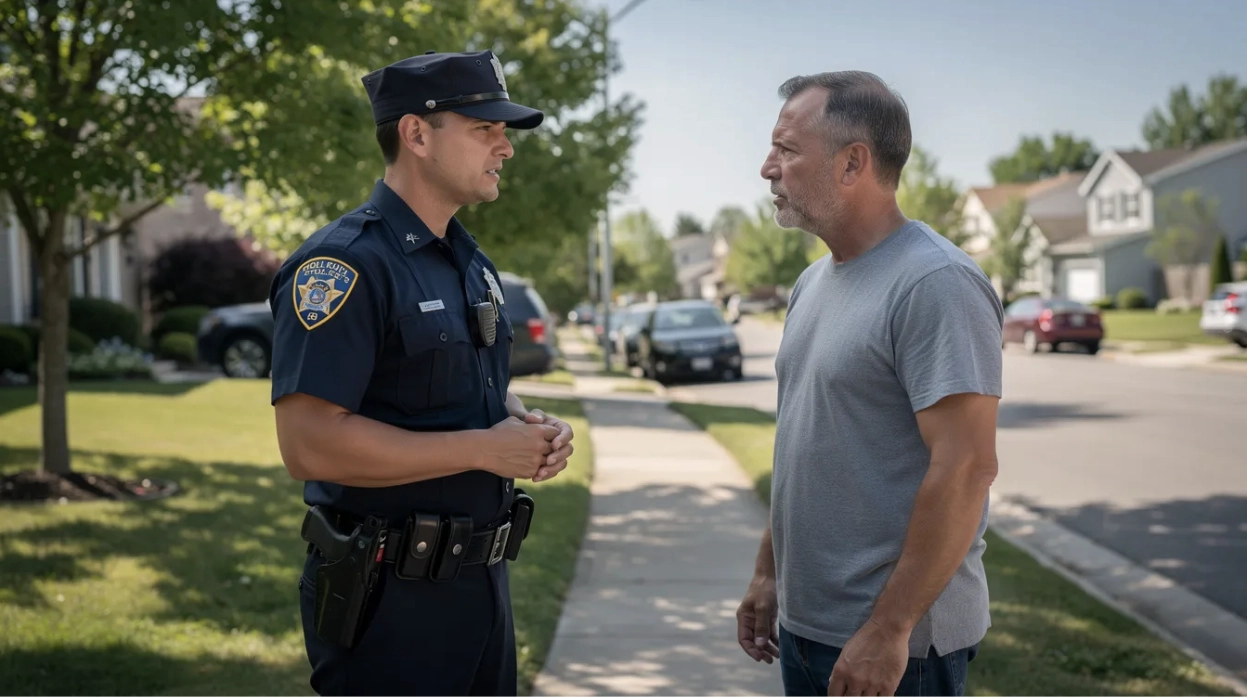
Common Situations That Require De-Escalation Skills
De-escalation skills are used daily, not just in rare, extreme events. They apply to routine calls that can turn volatile in seconds.
Traffic stops. An anxious driver pulled over at 11:30 p.m. may fear arrest or feel humiliated. A trained officer opens with a calm introduction, explains the reason for the stop, and uses a steady tone. This simple approach reduces the driver’s fear and resistance, making the contact safer for everyone involved.
Domestic disturbances. Officers arrive at a chaotic family argument after a 911 call from neighbors. Emotions are high, and multiple people are talking over each other. Officers trained in active listening and verbal de escalation separate parties, acknowledge frustration, and explain clearly what will happen next, creating space for everyone to calm down.
Behavioral health and substance-use calls. A family calls about a loved one in crisis. The person may be confused, frightened, or unable to process rapid commands. Officers with crisis intervention communication training slow their pace, use simple language, and offer realistic choices rather than issuing demands.
Neighbor and business disputes. Noise complaints and trespassing concerns may seem minor, but they often involve people who feel disrespected or ignored. Officers who explain local ordinances, listen to both sides, and present options prevent these encounters from spiraling.
Public disturbances. Bar closing time conflicts, heated arguments at youth sports events, or disputes on public transit put officers in crowded, unpredictable environments. Communication under pressure-staying calm while managing multiple participants-is essential here.
Effective police de escalation training gives officers frameworks and language they can adapt to each moment, rather than rigid scripts that fail under real-world pressure.
De-Escalation Is Different From Traditional Police Training
Traditional police officer training has historically emphasized procedures, laws, physical skills, and tactics. Academies devoted significant hours to firearms qualification, defensive techniques, and legal updates-all necessary, but incomplete. Far fewer hours went to communication, conflict resolution, or crisis intervention communication.
Modern de-escalation training programs fill that gap by focusing on how human behavior works under stress-for both officers and civilians. Officers learn to recognize early signs of escalation such as changes in tone, pacing, posture, and repetitive statements. They practice using communication and time to shape events before enforcement decisions are required. This understanding of conflict psychology allows officers to determine the right approach for each situation rather than defaulting to a single response.
De-escalation does not replace officer safety tactics. It gives officers more tools to maintain control without unnecessarily escalating emotions. Many agencies now recognize communication and structured decision-making as critical components of modern officer training.
Defuse’s approach aligns with this shift by focusing on communication under pressure, conflict psychology, and officer thinking skills in realistic law enforcement scenarios. The result: officers who can influence outcomes through communication long before force becomes part of the conversation.
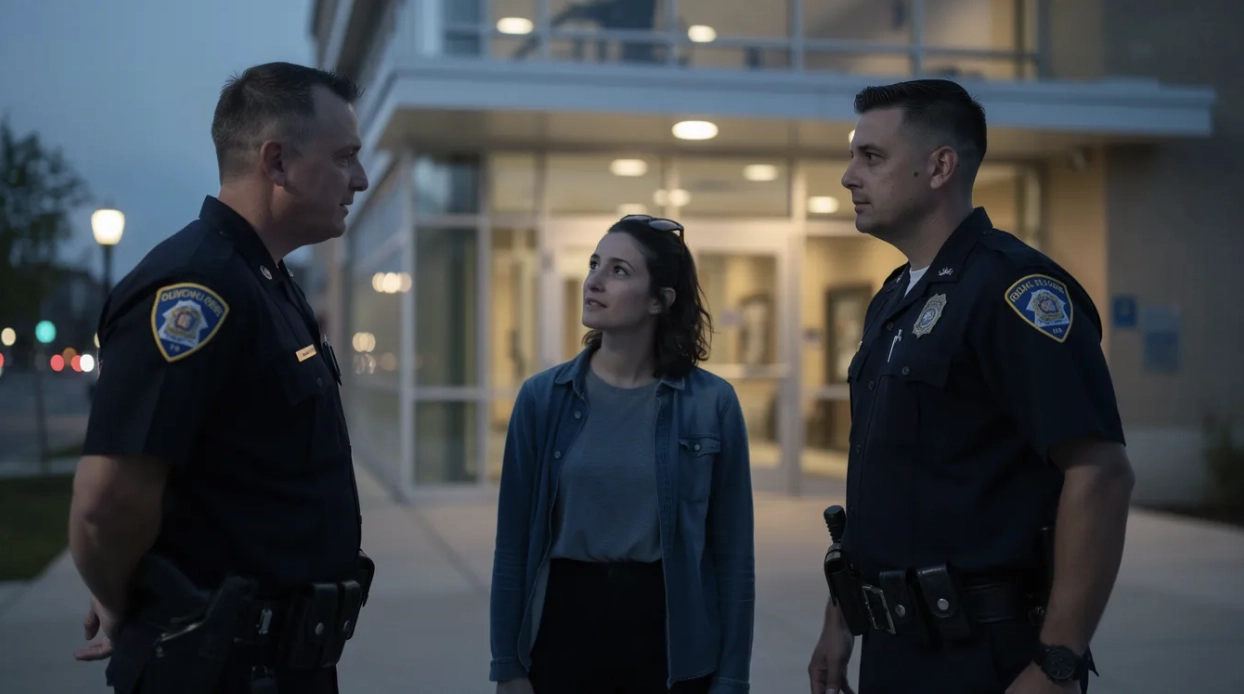
How Communication Supports Officer Safety
Calmer people are easier to predict, direct, and manage safely. When officers use communication to lower emotional intensity, they reduce unpredictability-and unpredictability is one of the greatest threats to officer safety on any call.
Active listening is a powerful tool. Paraphrasing what someone says (“Let me see if I’ve got this right…”) can interrupt an escalation cycle and help officers gather accurate information. Listening does not equal agreeing; it is a safety and information-gathering technique that slows the interaction and gives the officer time to assess.
Emotional self-regulation is equally important. Officers learn specific techniques-controlled breathing, internal scripts, deliberate tone management-to keep their own body language and voice calm when provoked or insulted. This reduces “contagious escalation,” where both parties’ emotions spiral upward and the situation becomes harder to control.
Verbal communication strategies make a measurable difference. Simple, clear instructions replace rapid-fire commands. Explaining the “why” behind actions lowers resistance: “I’m separating you so I can hear each side without people interrupting.” Offering small, safe choices increases cooperation: “Do you want to talk here or over by the patrol car where it’s quieter?”
Professional presence and rapport-building round out the skill set. Using names where appropriate, respectful forms of address, and neutral language-even when others are angry-signals control without aggression. These techniques help protect both community members and officers by keeping encounters from escalating into physical confrontations that produce citizen injuries and officer injuries alike.
What Officers Learn During De-Escalation Training
Effective de escalation training for police officers is highly practical and scenario-based. Officers don’t sit through hours of lectures-they practice under realistic conditions and receive immediate feedback.
Here is what participants typically learn:
- Emotional self-regulation: Techniques to manage adrenaline, frustration, and fatigue during long shifts or repeated stressful calls.
- Conflict psychology: How people think, react, and communicate when they feel threatened, disrespected, or trapped.
- Active and reflective listening: Using paraphrasing, summarizing, and checking for understanding to defuse anger and clarify facts.
- Verbal de-escalation strategies: Specific language patterns that show respect, acknowledge emotion, and guide people toward compliance.
- Communication under pressure: Practicing calm, clear speech and steady non-verbal cues when radios are active, bystanders are filming, or family members are shouting.
- Rapport building in brief contacts: Using micro-rapport even in short encounters like traffic stops or quick follow-ups.
- Collaborative problem solving: Helping people save face while still following lawful orders or accepting practical solutions.
- Professional presence and boundaries: Being firm without being confrontational, and ending conversations professionally even when outcomes aren’t ideal.
Well-designed training uses realistic law-enforcement scenarios, role plays, and guided debriefs. Defuse structures sessions so officers can immediately apply skills on their next shift, using plain language and law-enforcement-specific examples rather than generic corporate content.
Common Communication Frameworks and Techniques Used in Training
Officers benefit from simple, repeatable frameworks they can recall quickly under stress. Complicated models fall apart when emotions are high and radios are buzzing.
A “recognize–pause–respond” model encourages officers to slow down before reacting to provocation. Recognizing an escalation trigger, pausing to check their own emotional state, and then choosing a measured response is a skill that becomes automatic with practice. A stepwise approach-introduce, explain, listen, clarify options, check understanding, and close the contact professionally-gives officers a mental structure for any encounter.
These frameworks support officer decision making by providing mental structure when calls are chaotic or emotionally intense. They also make it easier for supervisors to review body-worn camera footage and coach communication skills based on observable steps.
Verbal de escalation training includes specific phrases officers can adapt: acknowledging emotion (“I can hear how frustrated you are about what happened”) and redirecting to problem solving (“Let’s talk about what has to happen so everyone gets through this safely”). These approaches are aligned with departmental policies and procedural justice principles that improve outcomes across the board.
Strengthening Community Trust Through Communication
Every interaction-whether an arrest, a warning, or a cleared call-shapes how individuals and neighborhoods view their local police. Community relations are built or eroded one encounter at a time.
The connection between communication and trust is straightforward. People want to feel heard. They want to understand what is happening and why. They are more likely to view outcomes as fair when officers explain decisions respectfully-even when the outcome is not what they hoped for.
Law enforcement communication skills training helps officers explain processes clearly during stops and investigations, acknowledge frustration without inflaming it, and close encounters with clear next steps. Consider officers responding to a noise complaint who take a few extra moments to explain local ordinances and options, leaving the complainant and residents feeling respected even if one side doesn’t get everything they want.
Consistent, respectful verbal de escalation and communication builds long-term community trust and supports broader community policing goals. This is not about public relations-it is about professionalism that public safety professionals demonstrate on every call.
Reducing Stress and Burnout for Officers
Modern officers face repeated exposure to conflict, verbal aggression, trauma, and emotionally draining calls. Over time, this takes a toll. Strong de-escalation and communication skills can help.
Officers with communication confidence often experience significant changes in how they approach difficult calls. These skills shorten the emotional “tail” of encounters by preventing unnecessary arguments. They give officers more confidence when approaching unpredictable situations, reducing anticipatory stress. And they help officers separate personal identity from the anger they encounter-recognizing that “they are angry at the situation, not at me as a person.”
Training covers recognizing escalation triggers in both the public and within the officer, using brief on-scene resets like controlled breathing before re-engaging, and ending calls with mental closure techniques that help officers move on to the next task. Law enforcement de-escalation training supports resilience when combined with agency wellness efforts, peer support, and good supervision.
An officer who previously dreaded neighbor disputes-because they always seemed to turn into shouting matches-now approaches them with a simple communication plan and specific language to use. That shift in confidence is measurable and lasting.
De-Escalation Training for Supervisors and Command Staff
Sergeants, lieutenants, and command staff play a critical role in whether de-escalation practice sticks or fades. Supervisors model communication under pressure for their teams, evaluate body-worn camera footage, and coach communication techniques daily. Their support determines whether skills are used consistently or erode over time.
De-escalation training for police supervisors includes learning objectives beyond personal skill-building: giving constructive feedback on communication rather than focusing only on procedural checklists, recognizing when officers successfully de-escalate and reinforcing those behaviors, and integrating de-escalation and communication expectations into field training officer programs and evaluation processes.
Law enforcement leadership training around communication aligns policy, practice, and culture. When supervisors and command staff share the same knowledge and language as their patrol officers, line officers are far more likely to apply what they learned in class.
Training Led by Active Conflict Practitioners
Defuse trainers are active conflict practitioners who help organizations navigate difficult conversations, workplace disputes, customer conflicts, and high-stakes communication challenges. Participants learn practical techniques that have been tested in real-world situations rather than concepts that exist only in theory.
This hands-on expertise ensures training is relevant, immediately applicable, and grounded in the realities officers face on shift. The active conflict practitioner approach strengthens learning retention and builds confidence in communication skills that protect officers and communities alike.
How Defuse Designs Law Enforcement De-Escalation Training
Defuse is a communication and conflict-management training provider that customizes programs for law enforcement environments. Our trainers have 30+ years of combined experience and understand what officers face on shift.
Our instructional approach combines brief concept delivery with extensive practice and feedback. We use law-enforcement-specific scenarios drawn from real patrol, investigations, and community policing encounters. The language we teach is clear and practical-phrases officers can actually use on calls, not just in a classroom.
We offer flexible delivery options:
- In-person training for departments and regional academies
- Live virtual sessions for agencies spread across multiple locations
- On-demand learning modules that support refreshers between in-person sessions
Defuse has served 80+ industries, with training adapted specifically for police and public safety agencies. Thousands of professionals have been trained across 250+ teams, with a 98% satisfaction rating. Our training program integrates easily with existing police training programs, FTO processes, and performance management systems without requiring a complete overhaul.
Implementing a De-Escalation Training Program in Your Agency
Chiefs and training coordinators must balance staffing, budgets, and multiple mandated trainings when adding new programs. Implementation needs to be realistic and manageable.
Start by assessing current communication and de-escalation content in academy and in-service curricula. Identify frequent call types where communication breakdowns occur, based on complaints, internal reviews, or incident reports. Decide which groups to train first: patrol officers, FTOs, supervisors, or specialized units like crisis intervention teams.
Integrate de-escalation concepts into roll-call refreshers, scenario days, and reality-based training to reinforce skills regularly. Incorporate communication standards into policy, performance reviews, and coaching to sustain practice. Defuse supports agencies with pre-training consultation, post-training materials for supervisors and FTOs, and periodic refreshers to combat skill decay.
Frequently Asked Questions About De-Escalation Training for Police Officers
Communication as a Core Officer Safety Skill
De-escalation training for police officers is fundamentally about communication, professionalism, and better decisions under pressure. It is not a replacement for tactical training-it is the other half of what complete officer preparation looks like.
Strong communication and verbal de escalation skills help officers control scenes more effectively, support officer and public safety, and improve community trust over time. Agency leaders who treat communication as a core component of officer safety training-on par with technical and tactical skills-build departments that are more professional, more resilient, and better positioned for the future.
These skills are trainable, reinforceable, and career-long. If your agency is ready to invest in practical, scenario-based communication training for your officers and supervisors, explore what Defuse offers for law enforcement teams.
Our Trainers
When you work with the Defuse Team, you always work with a Program Director, a Trainer, and an Account Executive. Here are just a few of our fantastic trainers.

Jeremy Pollack, Ph.D.
Program Director & Trainer
Jeremy is a social-organizational psychologist and a leader in the field of workplace conflict resolution and de-escalation.
LinkedIn
Sara Jeckovich, M.A.
Program Director & Trainer
Sara is a seasoned practitioner and has developed and implemented de-escalation training programs for dozens of organizations and teams.
LinkedIn
Luke Wiesner, M.S.
Program Director & Trainer
Luke has been a conflict practitioner for more than a decade, working with companies around the country to develop custom programming.
LinkedIn
Toni Hawkins, M.A.
Senior Trainer
Toni has led both large-and small de-escalation trainings for a variety of industries, from major non-profits to Fortune 500 companies.
LinkedInNeed De-Escalation Training For Your Team?
Get in touch today to learn how we can improve coworker and/or customer relationships at your company.
