













On-Demand Training Course
Social workers have one of the most stressful jobs out there. Handling intense client issues can lead to fatigue, frustration, and burn out. This is especially true when dealing with emotionally escalated clients.
At Defuse De-Escalation Training, we provide practical training on de-escalation techniques for every member of your social work services team.
Course Price $89.00
- Approximately 90 minutes to complete
- Includes interactive practice exercises and multi-media lessons
- Includes Certificate of Completion
Need to enroll 10 or more participants?
Request Bulk OrderCourse Curriculum
- Overview of basic escalated conflict theory, psychology, and neurobiology
- Practical self-regulation and emotional self-management techniques
- Learn to put client care before position or policy enforcement without eliminating policies
- Learn to utilize basic conflict psychology in de-escalating conflicts
- Reflective listening techniques
- How and when to implement patient reassurance during de-escalation
- Using policy or rules explanation effectively
- Learning to open a space for collaboration with emotionally charged people
Table of Contents
- Why De-Escalation Training Matters in Social Work
- What Is De-Escalation Training for Social Workers?
- Why Social Workers Need De-Escalation Training
- Social Work Settings Where De-Escalation Skills Matter
- Key Skills Taught in De-Escalation Training for Social Workers
- Benefits of De-Escalation Training for Social Service Organizations
- How Agency Leaders Benefit From De-Escalation Training
- Why Choose Defuse for Social Worker De-Escalation Training
- How to Bring De-Escalation Training to Your Social Service Organization
- Frequently Asked Questions About De-Escalation Training for Social Workers
Online De-Escalation Training for Social Workers
Our asynchronous De-escalation Training for Social Workers course utilizes our industry-leading methods, which have been successfully taught and applied to participants in more than 60 industries around North America, from small retail shops to Fortune 100 companies.
Course Provider
Organization
Course Provider Name
Defuse De-Escalation Training
Course Provider URL
https://deescalation-training.com/
Course Mode
Online
Course Type
Paid
Course Currency
USD
Course Price
$89.00
Social workers are some of the most valuable (yet underappreciated) professionals in the country. Social workers can be deployed in a wide variety of settings, including senior assisted living centers, hospitals, family counseling centers, mental health facilities, and more, often dealing with emotionally intense situations.
A big part of social work is working with people from different backgrounds and cultures. Social workers also have to be part of high-stress situations where conflicts can arise quickly and suddenly. That’s why it’s so important for social workers to have de-escalation training.
For that reason, many social workers are mental health professionals, adept at assessing potentially violent situations and de-escalating them accordingly. However, not all conflicts are a result of mental illness, which is why it’s imperative for social workers to undergo comprehensive de-escalation training.
Fortunately, Defuse offers high-quality de-escalation programs that social workers can use in a wide variety of situations. We understand the challenging situations these workers face regularly, which is why we’re committed to providing the best service.
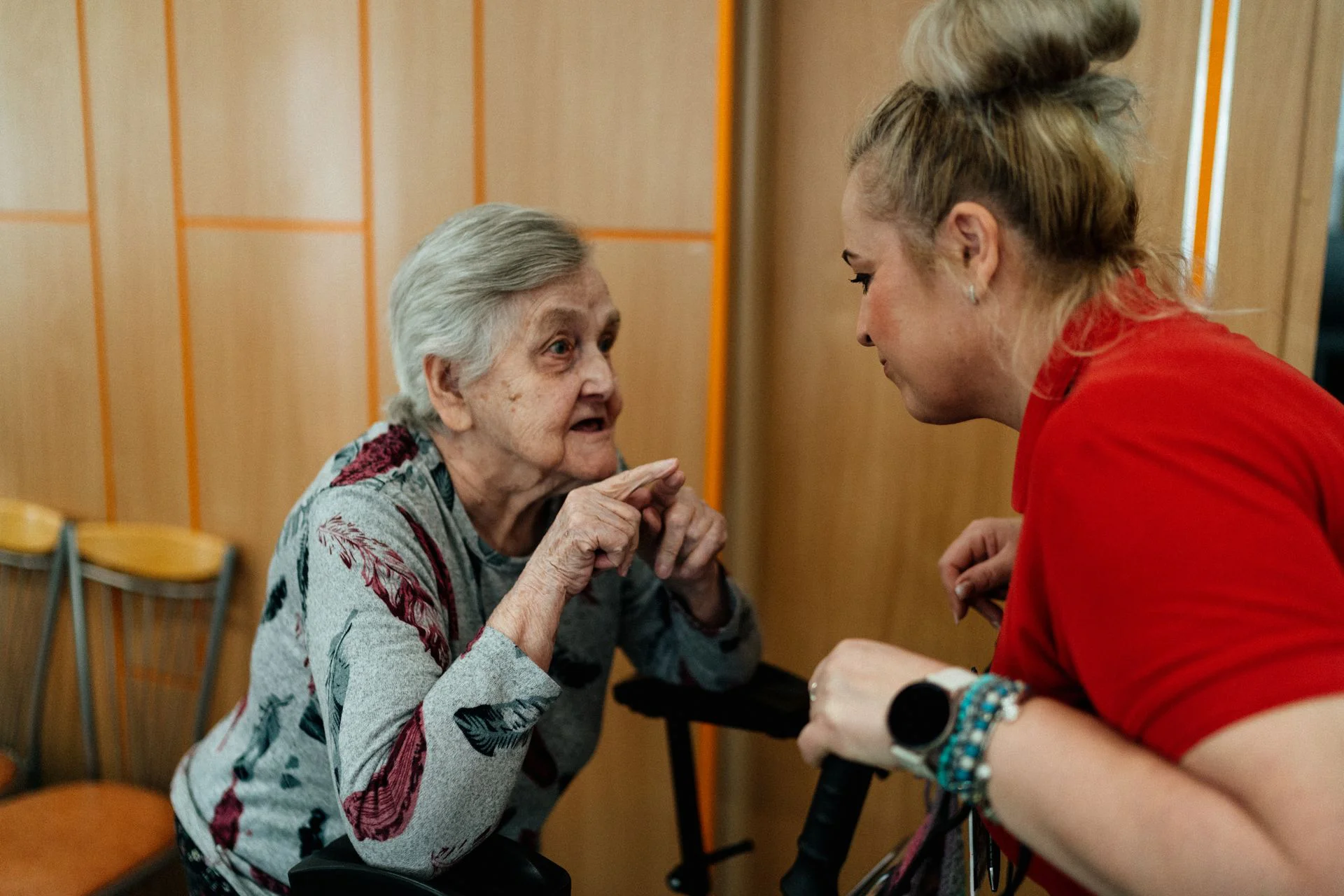
Why De-Escalation Training Matters in Social Work
De-escalation training for social workers equips professionals with essential communication skills, crisis intervention strategies, and verbal and nonverbal de-escalation techniques to manage high-emotion situations before they escalate into harm. Defuse provides de-escalation training specifically designed for professionals who regularly work with emotionally escalated individuals, including social workers, behavioral health teams, healthcare organizations, schools, and social service agencies.
Social workers often engage with people during some of the most difficult moments of their lives, including mental health crises, family conflict, housing instability, substance use challenges, grief, and trauma. This training integrates Defuse’s core pillars—conflict psychology, emotional self-regulation, verbal de-escalation, and nonverbal de-escalation—to help social workers effectively de escalate tense situations, guide conversations with respect, and protect both themselves and the individuals they serve.
Social workers routinely encounter hostility, threats, intense frustration, and unpredictable behavior. This training helps them communicate more effectively during crises, reduce escalation risk, and navigate difficult conversations with greater confidence. For organizations, effective de-escalation training creates a more consistent approach to crisis response, strengthens workplace safety initiatives, and helps teams handle difficult interactions with greater confidence.
What Is De-Escalation Training for Social Workers?
De-escalation training for social workers is structured instruction focused on verbal and nonverbal de-escalation techniques, emotional regulation, conflict psychology, and crisis response frameworks. Unlike generic escalation training designed for security or corrections, this program centers on relational and verbal strategies rather than physical restraint or coercion.
The training teaches social workers to recognize early warning signs of escalation, including shifts in tone, pacing, body language, and emotional intensity, so they can intervene before a situation reaches a crisis peak. These de-escalation skills are designed for diverse social work settings: child welfare home visits, behavioral health clinics, hospital emergency departments, community outreach, and school-based programs.
Core components include:
- Communication skills and verbal strategies for difficult conversations
- Conflict psychology and emotional self-regulation under stress
- Verbal and nonverbal de-escalation techniques
- Crisis intervention frameworks and safety planning
- Trauma-informed communication that preserves dignity

Why Social Workers Need De-Escalation Training
Social workers serve as first responders to emotional distress and conflict. They deliver difficult news, conduct mandated interventions, encounter suicidal behavior, and work with families in acute crisis. Without structured de-escalation training, these complex situations can place stress on both staff and clients.
Effective de-escalation skills help social workers maintain trust, navigate resistance, and keep conversations productive even when emotions run high. By learning to influence interactions with respect and empathy, social workers build stronger relationships that preserve client dignity and promote cooperation.
Agencies prioritize social worker de-escalation training to:
- Ensure safety for staff navigating volatile home visits and field encounters
- Strengthen communication effectiveness for better client outcomes
- Build staff confidence in managing challenging interactions
- Preserve and enhance therapeutic relationships through respectful dialogue
- Reduce organizational liability and workplace violence prevention gaps
- Improve outcomes for client populations experiencing mental health challenges, trauma, or grief
- Strengthen staff retention by investing in emotional safety and professional boundaries
- Align daily practice with regulatory expectations that emphasize verbal intervention over restraint
Social Work Settings Where De-Escalation Skills Matter
De-escalation skills are vital across a wide range of social work environments where emotionally charged situations commonly arise.
- Child Protective Services (CPS): Managing tense family dynamics during investigations and home visits.
- Adult Protective Services (APS): Addressing elder abuse or neglect cases with vulnerable adults.
- Hospital Social Work: Navigating grief, fear, and conflict in emergency and inpatient settings.
- Behavioral Health: Supporting clients through mental health crises and emotional distress.
- Community Outreach and Homeless Services: Building trust with individuals facing housing instability.
- Substance Use Programs: Engaging clients resistant to treatment or experiencing withdrawal.
- School Social Work: Managing adolescent emotional volatility and peer conflicts.
- Domestic Violence Services: Providing support while maintaining safety in high-risk situations.
- Crisis Response Teams: Responding to acute incidents requiring rapid de-escalation.
Key Skills Taught in De-Escalation Training for Social Workers
Defuse’s training focuses on practical, actionable skills that social workers can apply immediately. Participants learn how to stay calm, think clearly, and choose language intentionally even under pressure. Our approach integrates conflict psychology to understand behavior patterns, emotional self-regulation to maintain composure, and verbal and nonverbal techniques to effectively de escalate situations.
Recognizing Escalation Early
Social workers learn to identify subtle cues that signal rising tension, such as changes in voice tone, body posture, pacing, and facial expressions. Recognizing these early warning signs allows social workers to intervene proactively before emotions escalate into aggression or withdrawal.
Understanding conflict psychology helps social workers interpret behaviors within the context of trauma, stress, or fear, enabling them to respond with empathy rather than reaction. Early recognition also supports better risk assessment and timely crisis intervention.
Emotional Self-Regulation
Managing one’s own emotional response is fundamental to effective de-escalation. Training emphasizes techniques for social workers to monitor their stress levels, recognize personal triggers, and use breathing, grounding, and mental reframing strategies to maintain calm.
Emotional self-regulation not only protects social workers from burnout but also influences the emotional energy in interactions. When a social worker remains composed, it helps clients mirror that calm, reducing overall tension and opening pathways to dialogue.
Verbal De-Escalation Techniques
Participants master verbal strategies to guide conversations toward safety and cooperation. This includes using calm, clear language; validating emotions without endorsing harmful behavior; offering structured choices; and using tone modulation to reduce perceived threats.
Verbal de-escalation also involves strategic phrasing that respects client autonomy while setting clear professional boundaries. These techniques help social workers influence conversations productively and avoid escalating conflict.
Active and Reflective Listening
Active listening goes beyond hearing words—it involves paying attention to emotional content and underlying needs. Social workers learn to reflect feelings back to clients, demonstrating understanding and respect, which can significantly reduce emotional intensity.
Reflective listening builds rapport and trust, making clients feel heard and valued. This technique also provides social workers with deeper insight into client perspectives, enabling more effective crisis communication and conflict resolution.
Boundary Setting
Setting and maintaining clear boundaries is essential for safety and professionalism. Training teaches social workers how to assert limits respectfully, communicate consequences calmly, and handle resistance without escalating tension.
Boundary setting supports workplace violence prevention and helps social workers protect themselves while maintaining client respect. It also clarifies roles and expectations, reducing confusion during difficult conversations.
Risk Assessment
Social workers learn to assess environmental and behavioral risks continuously. This includes evaluating physical space, client history, and current emotional states to determine when to de escalate verbally, seek backup, or activate crisis protocols.
Effective risk assessment integrates observational skills and knowledge of conflict dynamics, allowing social workers to make informed decisions that protect everyone involved.

Benefits of De-Escalation Training for Social Service Organizations
For social service organizations, de-escalation training is both a staff safety initiative and a quality-of-service investment.
Organizational benefits include:
- Fewer critical incidents and reduced need for physical intervention
- Stronger conflict resolution across teams and departments
- Improved client interactions, trust, and engagement in services
- Greater staff confidence in managing challenging situations
- Enhanced crisis management and workplace violence prevention
- More consistent documentation and incident response
A shared de-escalation framework creates consistent responses across your organization, reducing mixed messages to clients and other professionals.
Impact on Staff Well-Being and Retention
Reliable de-escalation skills reduce chronic stress, emotional exhaustion, and feelings of helplessness. When organizations invest in this training, it signals that leadership takes emotional safety seriously, which supports morale and retention. Practice-based learning helps social workers build confidence and emotion management skills more effectively than classroom lecture alone.
Improved Client Relationships and Outcomes
Consistent, respectful de-escalation leads to higher trust, more honest disclosure, and better engagement. While training cannot guarantee outcomes, it significantly increases the likelihood of calmer, more collaborative interactions. Effective communication skills are especially valuable in long-term case management, where the ability to manage frustration, recognize anger, and reflect understanding determines whether clients stay engaged.
How Agency Leaders Benefit From De-Escalation Training
Agency leaders and decision-makers gain multiple advantages by investing in de-escalation training for their social work teams. Beyond individual skill development, this training fosters organizational resilience and operational consistency.
- Workplace Safety: Reduces incidents of workplace violence and creates a safer environment for staff and clients.
- Staff Confidence: Empowers social workers with skills and emotional regulation techniques that increase their confidence in managing difficult situations.
- Consistency: Establishes a common language and approach to conflict management across teams, improving coordination and reducing mixed messages.
- Retention: Supports employee well-being by reducing burnout and stress, contributing to higher staff retention rates.
- Risk Reduction: Enhances risk assessment capabilities, lowering organizational liability and preventing escalation-related incidents.
- Client Experience: Promotes respectful, trauma-informed interactions that improve client trust, cooperation, and satisfaction with services.
Investing in de-escalation training signals a commitment to professional development, safety, and quality care, positioning agencies as leaders in social service excellence.
Why Choose Defuse for Social Worker De-Escalation Training
Defuse is the #1 rated de-escalation training firm in the U.S., with over 30 years of combined field experience. We have trained thousands of employees across 80+ industries, including hundreds of companies and 250+ teams, with 98% student satisfaction. Our instructors are practitioners who understand what it means to manage emotionally escalated situations in the field.
We tailor every program to social work realities: home visits, field work, multidisciplinary teams, and community-based practice. Training is delivered through scenarios, role-play, and practical scripts tailored to the situations social workers actually expect to face.
Training Formats and Customization for Social Work Settings
Defuse works with agencies to identify typical high-risk scenarios and embed them into exercises and case studies. We train mixed teams, including social workers, supervisors, support staff, and security, so everyone shares the same de-escalation language. Flexible options include half-day, full-day, or multi-session programs, plus modular online learning for geographically dispersed teams.
How to Bring De-Escalation Training to Your Social Service Organization
To strengthen de-escalation skills across your team:
- Schedule a consultation with Defuse to discuss your organization’s needs
- Complete a needs assessment focused on social work roles, settings, and risk
- Select a training format: instructor-led (virtual or onsite), online course, or blended program
- Schedule sessions and plan for refresher training or advanced modules
- Involve supervisors, safety committees, and HR to align training with real workflow
Effective de-escalation is a learnable skill and a long-term investment in professional safety and client well-being. Contact Defuse to discuss instructor-led training, online options, or a pilot program for a single team. Building a safer, more confident social work workforce starts with giving your people the right tools.
Frequently Asked Questions About De-Escalation Training for Social Workers
Our Trainers
When you work with the Defuse Team, you always work with a Program Director, a Trainer, and an Account Executive. Here are just a few of our fantastic trainers.

Jeremy Pollack, Ph.D.
Program Director & Trainer
Jeremy is a social-organizational psychologist and a leader in the field of workplace conflict resolution and de-escalation.
LinkedIn
Sara Jeckovich, M.A.
Program Director & Trainer
Sara is a seasoned practitioner and has developed and implemented de-escalation training programs for dozens of organizations and teams.
LinkedIn
Luke Wiesner, M.S.
Program Director & Trainer
Luke has been a conflict practitioner for more than a decade, working with companies around the country to develop custom programming.
LinkedIn
Toni Hawkins, M.A.
Senior Trainer
Toni has led both large-and small de-escalation trainings for a variety of industries, from major non-profits to Fortune 500 companies.
LinkedInNeed De-Escalation Training For Your Team?
Get in touch today to learn how we can improve coworker and/or customer relationships at your company.
